
Lease of the Immovable Property in Cambodia
Pursuant to the Civil Code of the Kingdom of Cambodia, leases of immovable property are categorized into two types as below:
- (i) short-term leases, and
- (ii) perpetual leases (formerly known as long-term leases under the 2001 Land Law).
A lease with a term of 15 years or more is classified as a perpetual lease, which must not exceed 50 years. However, under the 2011 Law on the Application of the Civil Code, if a perpetual lease was established prior to the Civil Code’s implementation and has a term exceeding 50 years but not more than 99 years, it remains valid and enforceable. If the lease term exceeds 99 years, it must be reduced to 99 years.
Renewable
A perpetual lease may be renewed multiple times, provided that each renewal term does not exceed 50 years from the date of renewal.
Lease Formation
According to Article 109 of the 2001 Land Law, lease agreements must reflect the mutual consent of the parties and comply with existing laws.
In accordance with Article 245 (1) of the Civil Code, a perpetual lease must be in written form. While verbal leases are allowed, they are considered indefinite-term leases and may be terminated with advance notice equal to the rental period. Thus, oral agreements do not qualify as perpetual leases under the law.
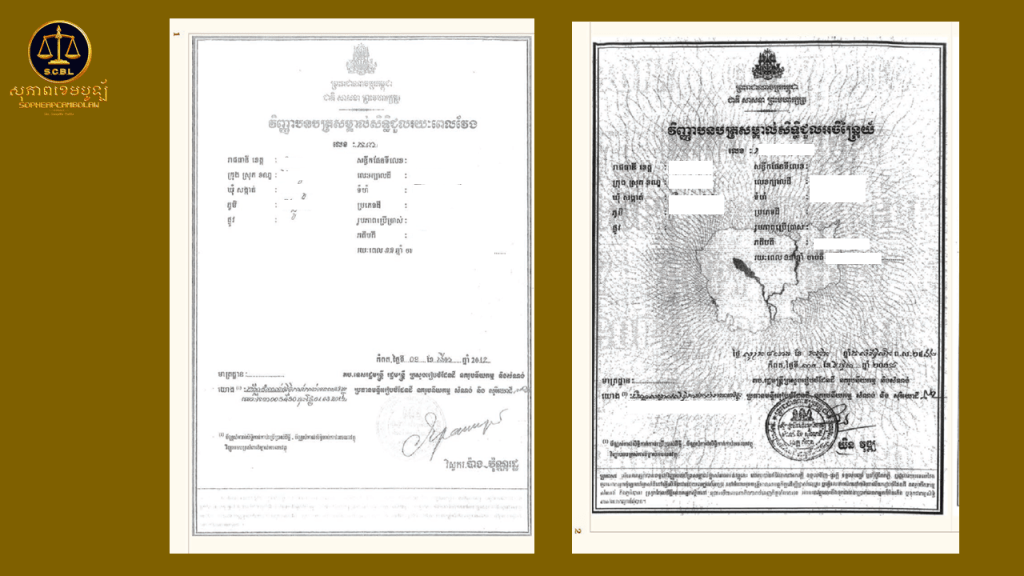
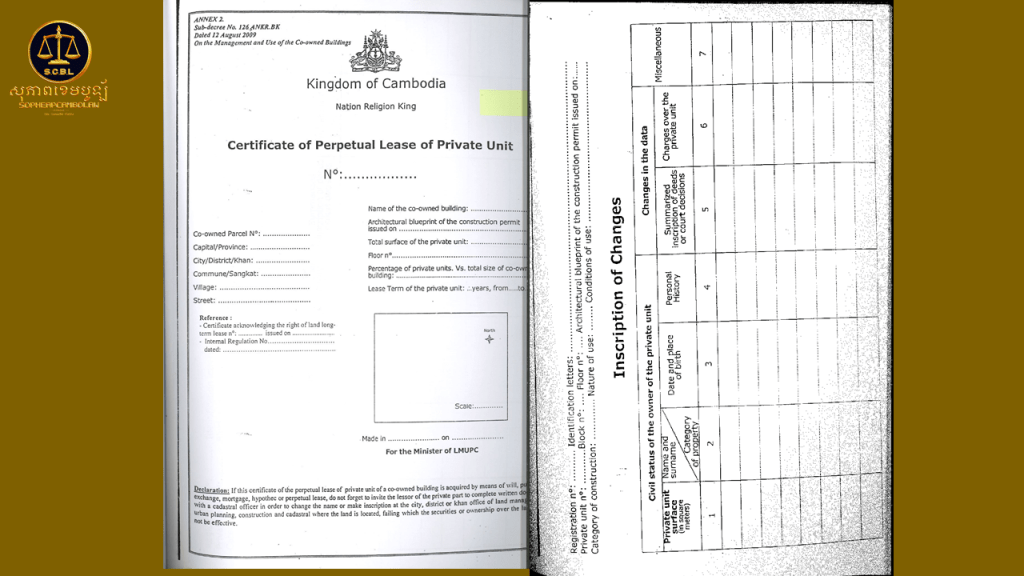
For a perpetual lease to be enforceable against third parties, it must be registered with the Cadastral Office. This registration is only accepted if the lease is certified by a notary public or the local Sangkat where the property is located. Once registered, the lease remains enforceable even if the property changes ownership.
In short, a valid perpetual lease must meet the following conditions: mutual agreement, legal compliance, written form, and official registration.
Rights of the Perpetaul Leasee
A perpetual lease grants the lessee a usufructuary real right, allowing them to possess, use, and benefit from the property during the lease term. They may take legal action to prevent or stop interference, even from third parties (Article 253, Civil Code). However, they do not have ownership rights such as transferring the property title and so forth.
Nonetheless, under Article 108 of the Land Law, perpetual leases are considered rights in rem and may be assigned or transferred. Article 252 of the Civil Code outlines three forms of transfer:
- Assignment of the lease to another party, with or without compensation,
- Subleasing the property, and
- Transfer through inheritance.
While the law provides these rights, lease agreements can include restrictions for example, requiring the lessor’s consent for transfer.
An interesting feature under Article 249 of the Civil Code allows either party to request a rental adjustment through the court if circumstances significantly change.
Termination of the Lease
Besides expiry at the end of the lease term, a perpetual lease can be terminated early under certain conditions. Notably, if the lessee fails to pay rent for three consecutive years, the lessor may terminate the lease (Article 250, Civil Code).
Termination can also occur due to breaches of contractual obligations. Upon termination, per Article 254, the lessee does not need to restore the property to its original state, and the lessor is entitled to any improvements or structures without compensation unless the parties agree otherwise and officially register such modifications.
Where the Civil Code does not provide specific guidance, general lease provisions apply.
Implications for Foreign Ownership of Land
Perpetual leases serve as a practical tool for foreign investors to secure long-term rights to land in Cambodia. Commonly, land is held through a Cambodian-registered Land Holding Company (LHC), where the foreign party owns 49% and the Cambodian party 51%. The LHC owns the land, and a perpetual lease is granted to the foreign investor, allowing them to enjoy long-term use rights for up to 50 years.
Conclusion
Perpetual leases play a significant role in Cambodia’s property system, offering legal protection and long-term rights to lessees. While similar to standard leases, they stand out due to their longer minimum term, registration requirement, rental adjustment options, transferability, relevance to foreign investment, and mortgageability. These factors make perpetual leases an essential legal instrument in Cambodia’s real estate framework.
-END-

This summary is for informational purposes only and does not constitute legal advice. It is not comprehensive, and readers should seek professional legal consultation for their specific circumstances. SOPHEAPCAMBOLAW retains full ownership of this content. Unauthorized reproduction, distribution, or use of any part of this article without prior written approval is strictly prohibited.
សព្វទានំ ធម្មទានំ ជិនាតិ
-Buddha-
Sharing knowledge is the most worthwhile endeavor of all.
 SOPHEAP CAMBO. LAW
Leave a comment