
Genearl Legal Point of View on Safty Purching Immovable Property In Cambodia. There are 05 (five) step for a safty transaction as below:
1. Document Verification before Making a Purchase Decision
Before deciding to purchase any immovable property, the buyer should conduct a data collection for review all related documents, including:
1.1 Title/type of ownership
In Cambodia, there variouse type of title and ownership over the immovable property such certificate acknowledgement of ownership over the immovable property (Hard Title), Certificate of Possessory Rights over the Immovable Property (Hard Title), Letter of ownership Transferring (Soft Title), Certificate acknowledgement of ownership over the private unit (Strata title) and so forth.
Sample of the Titles
- Certificate acknowledgement of ownership over the immovable property (The Latest Version)
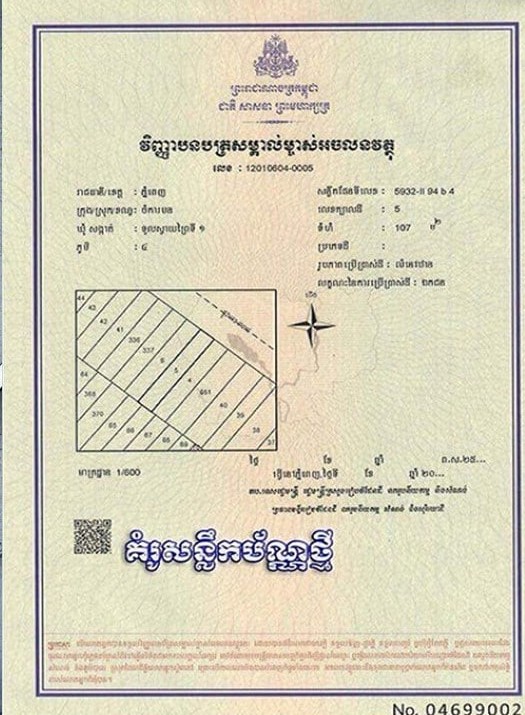
2. Certificate of Possessory Rights over the Immovable Property
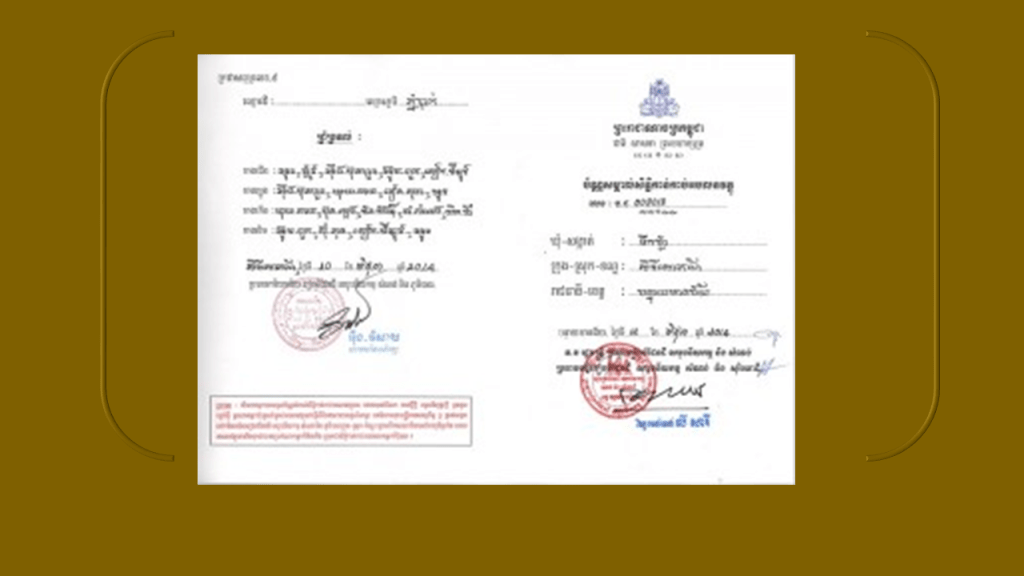
3. Letter of ownership Transferring (Soft Title)
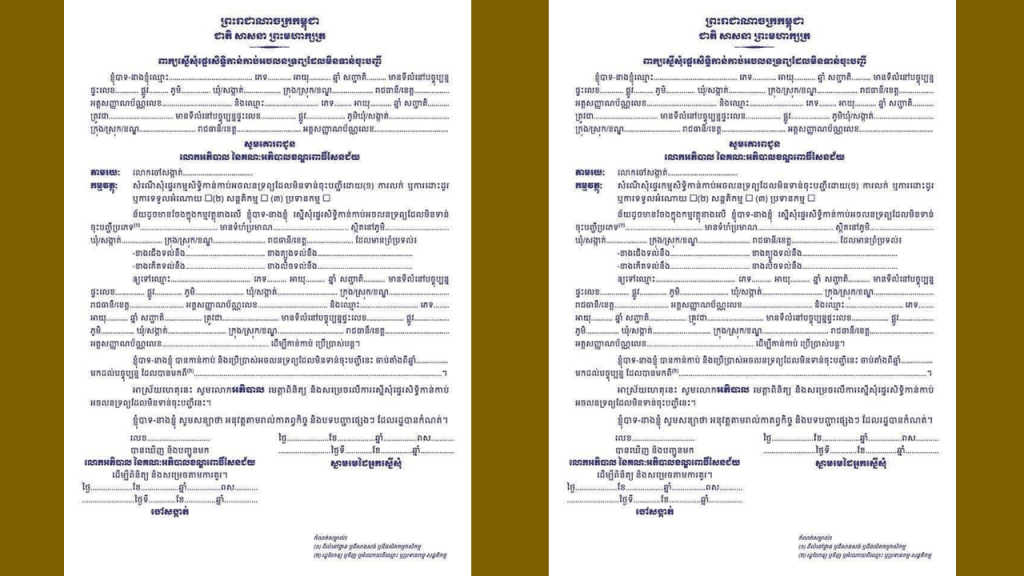
4. Certificate acknowledgement of ownership over the private unit (Strata title)

After the buyer defines the type ownership and/or titles, the buyer should further understand that who are the real owner of the immovable property and/or the latest named existing on those titles to make sure that the sellers are the rightfully person who is entitled the rights to legal sale the immovable property.
Then, the Buyer should seeking further information regarding the immovable proeperty which is subject to purcahshe about disputing. In regards, the buyer shall make sure that the immovable property deos not involved in any didspute including court cases.
One more important that the buyer should understand is the immovable property encumberered by any debts or mortages. Currenlty, It every easy to check this encumberered by just conduct it online through the website of the MLMUPC and pay for service fee of USD5 so that the buyer will received all infromation related (For how to check I will issued an other post later).
1.2 Tax Obligations
In Cambodia, there various type of tax obligation in respect of the immovable property such as annual property tax, un-use land tax, property rental tax, capital gain tax (will be implementing), stamp duty and registration fee and so on. Hence, the most important this is to understand that are there any outsanding tax obligations on the property which it is a subject to penalty by Tax Department. (for detail information of tax obligation i will issued a seperate articles).
2. Understanding the Property’s Legal Status based on Title Type
Based on the above mentioned, there are two categories of titles as below:
- Hard Title, and
- Soft Title.
2.1 Hard Title: All information is stored in the officail land registry book, which includes details about court disputes, encumbrances, and the name of the current legal owner. The transfer process for hard title onwership is straightforward and quick approximately for fast process is 12 working days and normal process 35 working days.
2.2 Soft title: No offcial data is stored, as this type of property is not yet registered in the national land registry. To verify the property the buyer shall conduct on site visit to collect information from the local authorities such as the village chief, commune/Sangkat, and district/Khan where the property is located.
Trnasfering ownerhip of unregistered land requires a land survey to avoid legal sales of state land, water bodies, or government insfastructure zones. Buyers can also negotiate with sellers to request registration into a hard title, which should be clearly stipulated as a key condition of the sale contract to ensure buyer protection.
In referring to the bove soft title transfer it take some compexity than the the hard title. However, soft titles able to convert to be hard title by apply for seperate land registration.
3. Land Measurement and Boundary Verification
Measuring and verifying land boundaries before signing a purchase agreement provides clarity about the land size, shape, and borders. Most importantly, it helps determine whether the property overlaps with state land, water bodies, or planned infrastructure projects, thus avoiding disputes during or after the ownership transfer process.
For this service, the land size will be the basis for calculating service fees.
4. Sale and Purchase Process
After thorough due diligence, the buyer should negotiate the sale-purchase agreement terms with the seller. The aim is to protect the buyer’s rights and ensure a safe transaction. In order to make this transaction more better, the buyer should engage with any professional legal pracitioner to help.
Key aspects to review include:
- The identity of the landowner (seller)
- Payment conditions
- Timeline for ownership/title transfer
- Method of payment (cash, bank transfer, or escrow account)
5. Title Verification before Final Payment
After the seller has transferred the ownership/title (either soft title or converted from soft to hard title into the buyer’s name), the buyer should have their lawyer verify the entry in the official land registry and confirm that all tax debts have been cleared before making the final payment.
The buyer must receive the following legal documents from the seller:
- For hard title cases:
- Final Sale and Purchase Agreement
- Application for ownership transfer registration
- Tax clearance letter from the relevant tax branch or General Department of Taxation
- For soft title cases:
- Land Transfer Letter for unregistered land
- Copy of the land measurement certificate
- Tax clearance letter from the relevant tax branch or General Department of Taxation.
© 2025 SOPHEAPCAMBOLAW | All Rights Reserved
This summary is for informational purposes only and does not constitute legal advice. It is not exhaustive, and you should seek professional legal guidance tailored to your specific circumstances. The content of this article is the property of SOPHEAPCAMBOLAW. If you wish to reproduce or use any part of it, you must obtain prior approval.
PHENG Sopheap (Mr.)
សព្វទានំ ធម្មទានំ ជិនាតិ
-ព្រះពុទ្ធ-
 SOPHEAP CAMBO. LAW
Leave a comment